
-
×
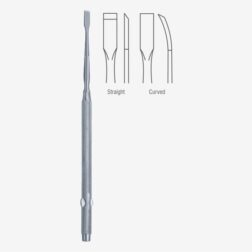 Ent Chisel Ent Surgical Instrumment
1 × ₹1,000.00
Ent Chisel Ent Surgical Instrumment
1 × ₹1,000.00
Subtotal: ₹1,000.00
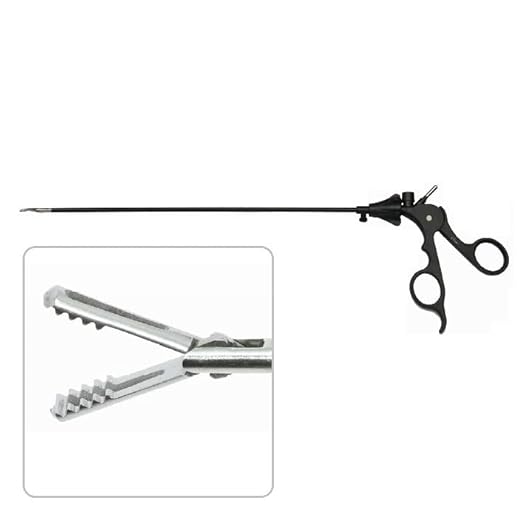
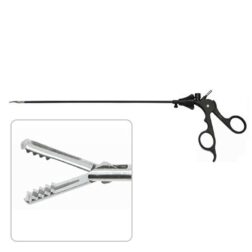
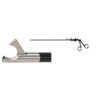
A laparoscopic grasping forcep is a surgical instrument used during minimally invasive (laparoscopic) surgeries to grasp, hold, manipulate or retract tissues/structures inside the body through small key-hole incisions.
A “plain” grasping forcep usually refers to a version without a ratchet lock (or with a simpler handle), suitable when the surgeon wants quick, manual control rather than locking forceps in place.
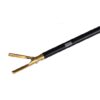
When such forceps are built in a “Mixter” style (right-angle / 90° angled jaws), they’re especially useful for reaching, grasping or dissecting structures that are deep, around corners, or otherwise difficult to access with straight instruments.
Good-quality laparoscopic plain grasping / Mixter forceps typically have the following features:
Construction Material: Medical–grade stainless steel (often surgical stainless steel), ensuring durability, corrosion resistance, and ability to be sterilized and reused.
Shaft & Diameter: Standard laparoscopic dimensions — typically a 5 mm diameter shaft (some may offer 3 mm or 10 mm variants) and working length around 330 mm (≈ 33 cm), which fits through standard laparoscopic ports. Jaw / Tip Design:
For “Mixter” versions: right-angle jaws with horizontal or longitudinal serrations to hold tissues securely.
Serrated or fenestrated jaws provide grip while aiming to be atraumatic (i.e. minimize tissue damage).
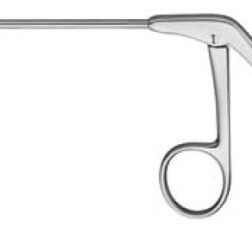
Handle / Control: Plain handle (non-ratcheted) or, depending on version, a ratchet/locking handle for controlled clamping. Plain handle versions allow quick manual control.
Sterilization / Reusability: Typically autoclavable and reusable, suitable for repeated surgical use.
The laparoscopic plain/Mixter grasping forcep is used across many types of laparoscopic and minimally invasive surgeries — including general surgery, gynecology, urology, gastrointestinal, and pediatric procedures.
Common applications:
Grasping and manipulating tissues or organs inside the abdominal/pelvic cavity.
Retracting organs or tissues to improve exposure of the surgical field.
Holding or isolating tubular structures (vessels, ducts), including for passing ligatures or vessel loops for ligation or retraction.
Assisting in dissection — blunt dissection or separating tissue planes, especially in deep or angled anatomical regions.
Because of its angled jaw (in Mixter versions), it is particularly useful in “hard-to-reach” or “around-corner” anatomical regions where straight instruments may not provide adequate access.
An example of such an instrument is Hospiclub Laparoscopic Plain Grasping Forcep — a laparoscopic-grade grasper intended for minimally invasive procedures. It is marketed as “premium quality,” and typically offers the features described above: medical-grade stainless steel, standard laparoscopic dimensions, compatibility with sterilization, and design suitable for tissue manipulation in laparoscopic surgeries.
Another example is Mixter Right Angle Grasper 5 mm x 330 mm, which demonstrates the classic right-angle Mixter-type design optimized for deep or angled anatomical access.

Reviews
There are no reviews yet.