
-
×
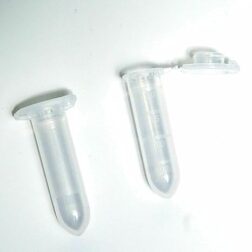
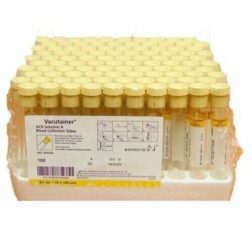
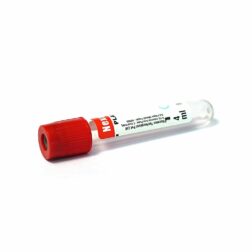 Plain (4ml) Vacuum Blood Collection Tubes (PACK -100PCS)
1 × ₹2,662.86
Plain (4ml) Vacuum Blood Collection Tubes (PACK -100PCS)
1 × ₹2,662.86
Subtotal: ₹2,662.86
The tube is made of PET (polyethylene terephthalate) — a durable, medical-grade plastic.
It is a vacuum blood collection tube, meaning it has pre-set internal vacuum so that when you draw blood the vacuum helps draw the correct volume into the tube automatically.
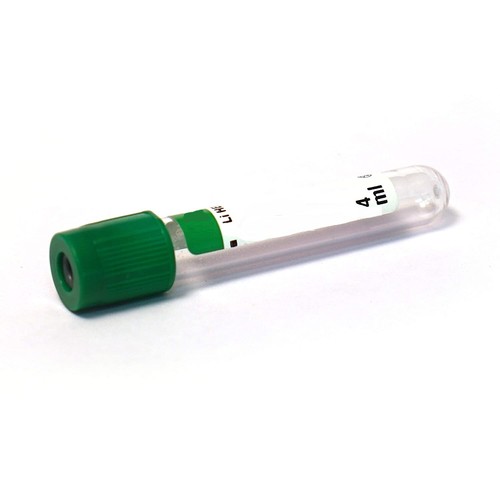
It contains an anticoagulant additive: Lithium Heparin. This is why the cap is typically coded green. It is sold in bulk — pack of 100 tubes (as per your description). Many lab-suppliers supply lithium heparin vacuum tubes in such bulk packs.
Prevents blood clotting: The lithium heparin acts as an anticoagulant. It activates antithrombin, which inhibits the blood clotting cascade, thus preventing clot formation. This allows the blood to remain in fluid (plasma) form or as whole blood.
Suitable for plasma / whole-blood tests: With the heparin preventing clotting, you can separate plasma (by centrifugation) for biochemical tests. This is ideal for many clinical lab analyses — e.g. biochemical tests, electrolyte measurements, blood gases, metabolic panels, etc.
Fast sample processing: Because coagulation is prevented, plasma separation can be done quickly (after centrifugation) — useful in emergency labs or for tests needing rapid turnaround.
Broad chemical compatibility: Lithium Heparin does not interfere with many ion measurements (e.g. sodium), which is important for accurate electrolyte/chemical analysesx
Depending on manufacturer and tube version, a typical lithium-heparin PET vacuum tube may have specifications like:
Tube Sizes: e.g. 13 × 75 mm, 13 × 100 mm, 16 × 100 mm.
Draw Volume: from ~2 mL up to ~10 mL depending on tube size.
Cap Colour: Green — for quick identification of heparin additive.
Additive concentration: Typical lithium heparin concentration around 15 IU per mL of blood (± tolerance depending on manufacturer).
Storage: Usually stored at controlled temperatures (often around 4–25 °C, depending on manufacturer guidelines).
Handling after collection: Immediately after blood draw, tube must be gently inverted 8–10 times to mix blood with the anticoagulant thoroughly.
Centrifugation: To separate plasma, typical guidance: centrifuge at specified speed/time (e.g. some sources recommend ~1300 g for 10 min, others 3500–4000 RPM for ~5 min, depending on tube and lab protocol)
These lithium-heparin vacuum tubes are commonly used in:
Clinical biochemical tests (e.g. kidney function, liver function, electrolytes, metabolic panels)
Electrolyte analysis, blood gas, ionized calcium, pH measurements
Emergency lab tests — where rapid sample processing and plasma separation is needed.
Research labs, where plasma or whole-blood samples are required for assays, flow cytometry, biochemistry, or blood rheology tests.
After blood collection, immediately invert tube gently 8–10 times to ensure proper mixing with heparin — otherwise, clotting may begin.
Tubes are usually for single use only; should be disposed in approved biohazard waste containers after use.
Although lithium-heparin tubes are excellent for many biochemical and electrolyte tests, they are generally not suitable for certain tests — e.g. coagulation studies, because the anticoagulant may interfere with clotting-based assays.
If a serum sample (instead of plasma) is needed, a different type of tube (without heparin, or with clot activator) must be used.









Reviews
There are no reviews yet.