
-
×
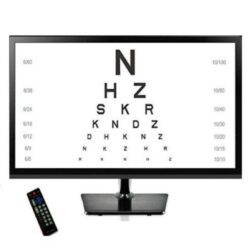
 18 Inches LED Digital Visual Acuity Chart
1 × ₹54,825.00
18 Inches LED Digital Visual Acuity Chart
1 × ₹54,825.00
Subtotal: ₹54,825.00
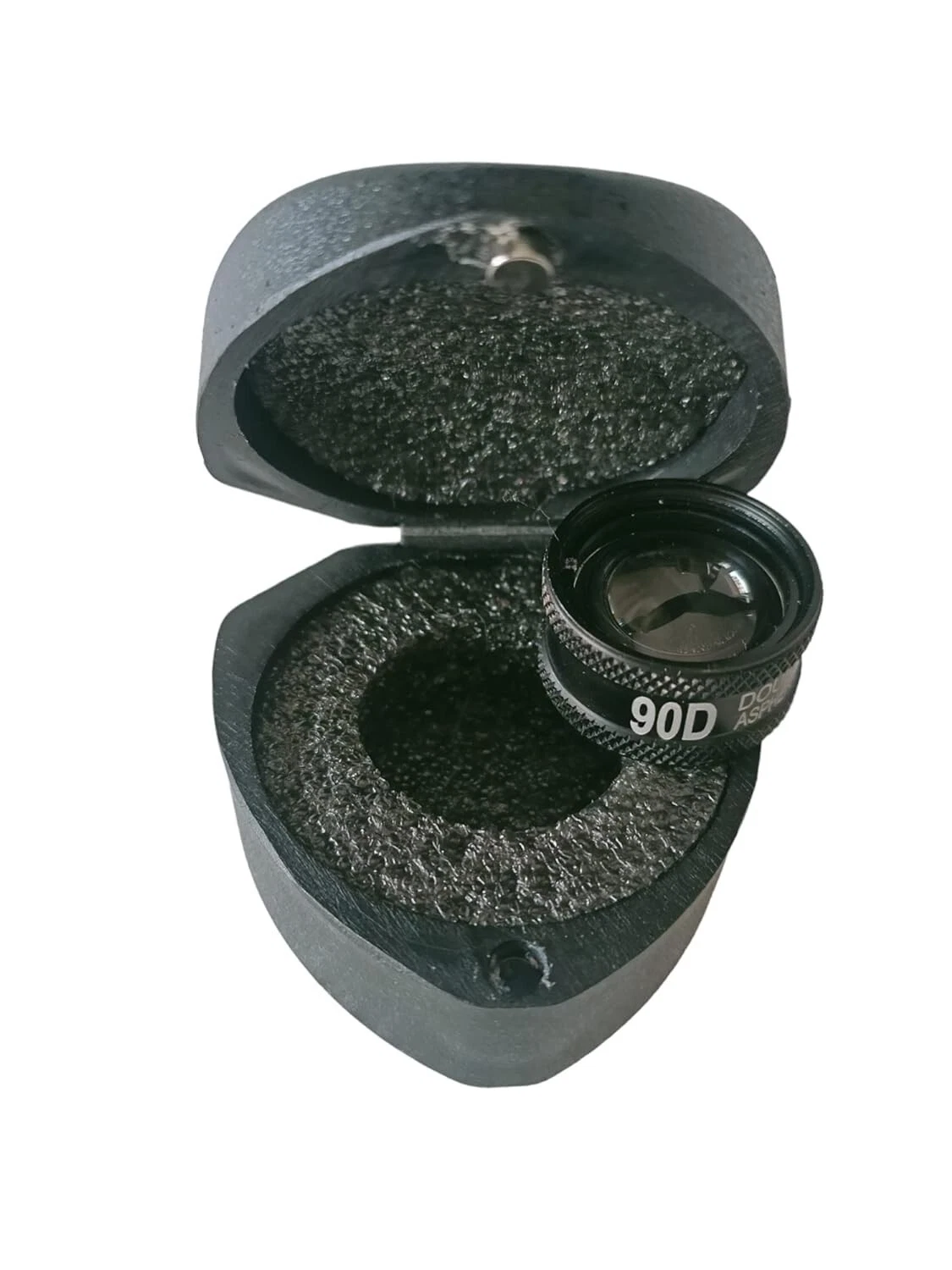
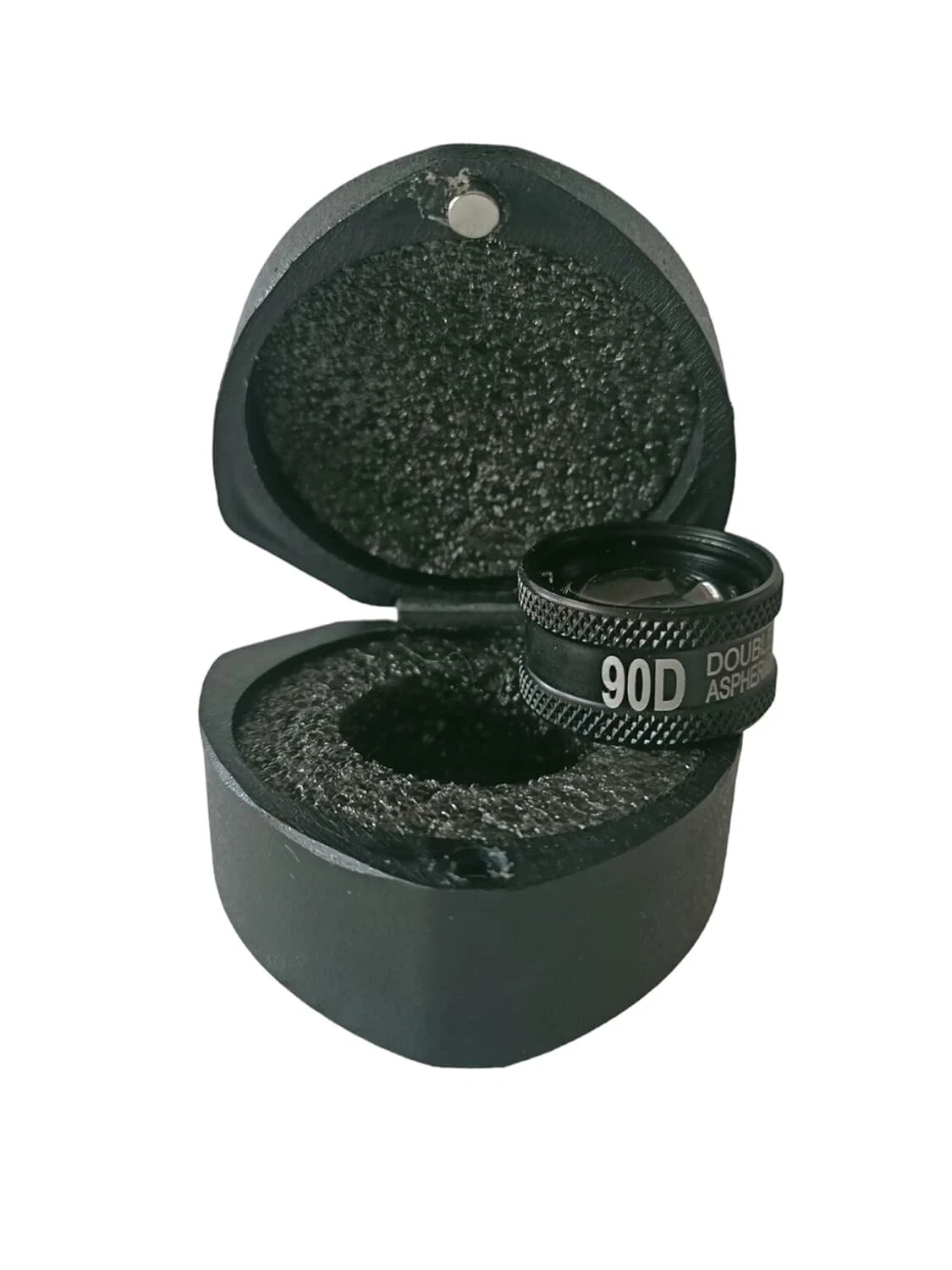
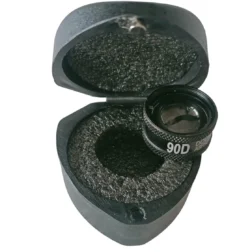
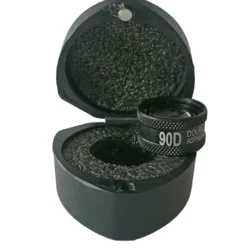
It is a non-contact slit-lamp lens with “90D” referring to 90 diopters — a power that makes it suitable for examining the posterior segment (fundus) of the eye (retina, optic nerve head, macula, etc.).
“Aspheric” means the lens surfaces are not purely spherical. Instead, their shape is designed to reduce optical aberrations (like spherical aberration), improving image clarity and reducing distortion compared to a simple spherical lens.
Often these lenses are double-aspheric (both surfaces aspheric), which further enhances imaging quality.
From standard product descriptions of 90D aspheric lenses:
| Feature | Typical Value / Description |
|---|---|
| Magnification | ~ 0.64× to 0.76× (depending on make) |
| Working Distance | ~ 7–8 mm from the eye / slit-lamp |
| Field of View (FOV) | Wide view: typical ~ 70°–94°, depending on lens and dynamic/ static viewing. |
| Optical Design | Double aspheric glass optics (to reduce distortion/aberrations) |
| Application | Non-contact fundus examination via slit lamp; effective even with small pupils |
| Build / Material | High-quality optical glass, often in an anodized ring for grip/handling |
The 90D aspheric lens is widely used by ophthalmologists and optometrists for:
Retina and fundus examination — evaluating retina, optic disc, macula, and posterior pole.
General diagnostic screening — diabetic retinopathy screening, macular degeneration detection, optic nerve head assessment, glaucoma evaluations, etc.
Examination even with small pupils — its optical design allows fundus visualization without requiring full pupil dilation in many cases.
Efficient slit-lamp funduscopy — non-contact and convenient for routine clinical use, making it a standard lens for many eye clinics.
Sharp, high-resolution retinal images: Aspheric surfaces reduce spherical and other aberrations, providing clearer, distortion-free views of retinal structures
Wide field of view + good magnification balance: Offers a compromise between seeing a broad area of the fundus and still getting enough detail — ideal for general fundus screening and diagnostics. \
Convenience & ergonomics: The lens is often compact, light, and ergonomically designed — easy to handle and integrate with slit-lamp biomicroscopes.
Versatility: Useful in a variety of clinical situations — routine exams, screenings, even cases with small pupils — making it a “must-have” for ophthalmology practice.
While 90D is a good general-purpose lens, sometimes other lenses (e.g. higher magnification or wider-field lenses) might be preferred depending on the specific diagnostic need (e.g. detailed macula work, peripheral retina, or very small pupils).
As with all non-contact slit-lamp lenses, proper cleaning and sterilization (or disinfection) between uses is important — surfaces must be free from dust/particles to avoid artefacts.
opthalmic equipments

opthalmic equipments
Adjustable Rotating Trial Frame In Full Metal For Trial Lens Set

opthalmic equipments

opthalmic equipments
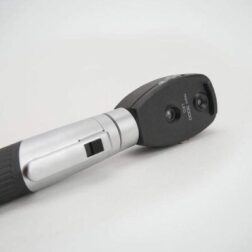
Heine Mini 3000 LED Ophthalmoscope Pocket with AA Battery Handle

opthalmic equipments

opthalmic equipments
opthalmic equipments
opthalmic equipments

Reviews
There are no reviews yet.